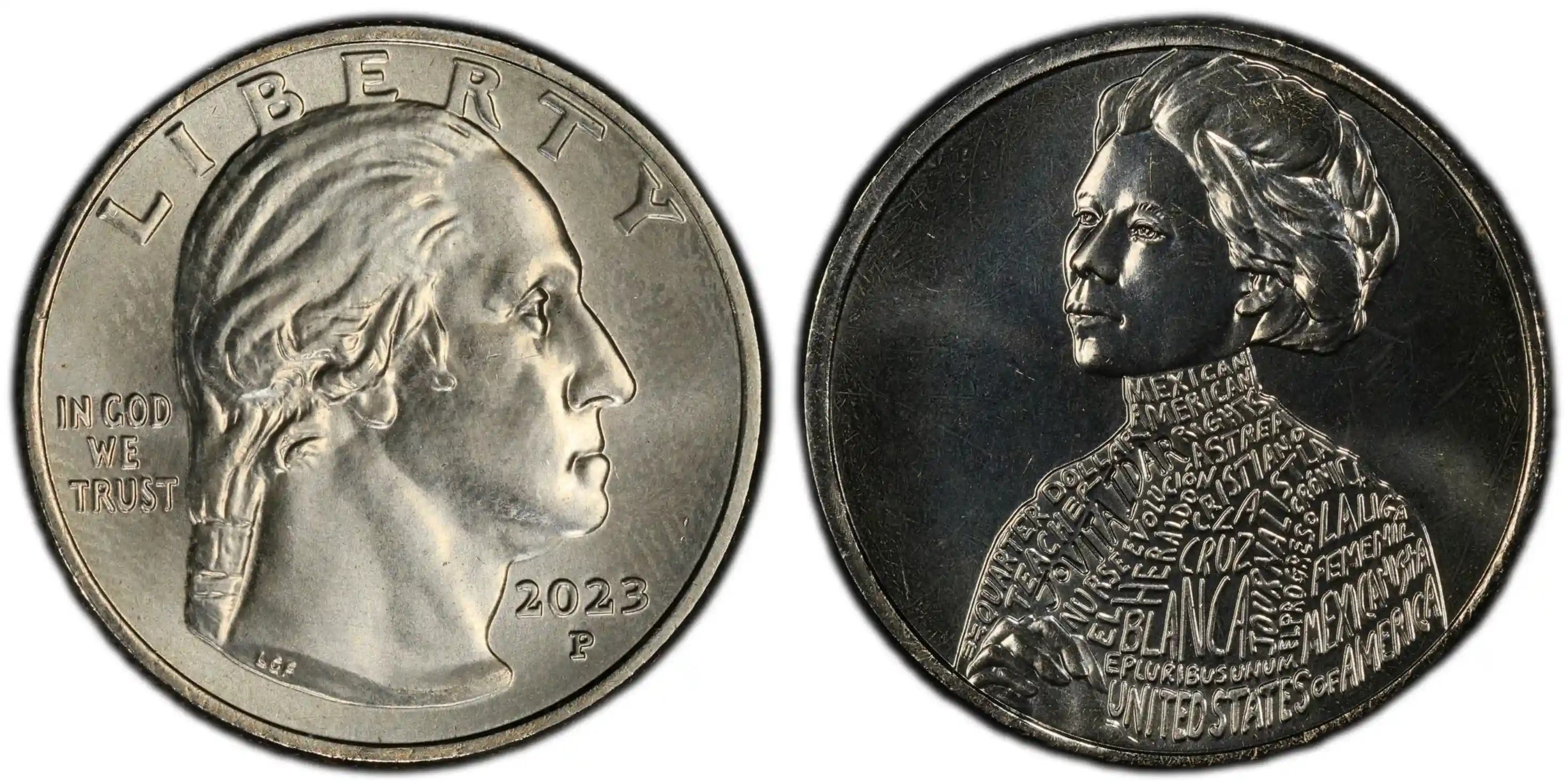
One Motto, Many Coins: The Variations of E Pluribus Unum
Consistency in wording hides diversity in execution.
The motto E Pluribus Unum coin officially debuted on United States gold coins in 1795.
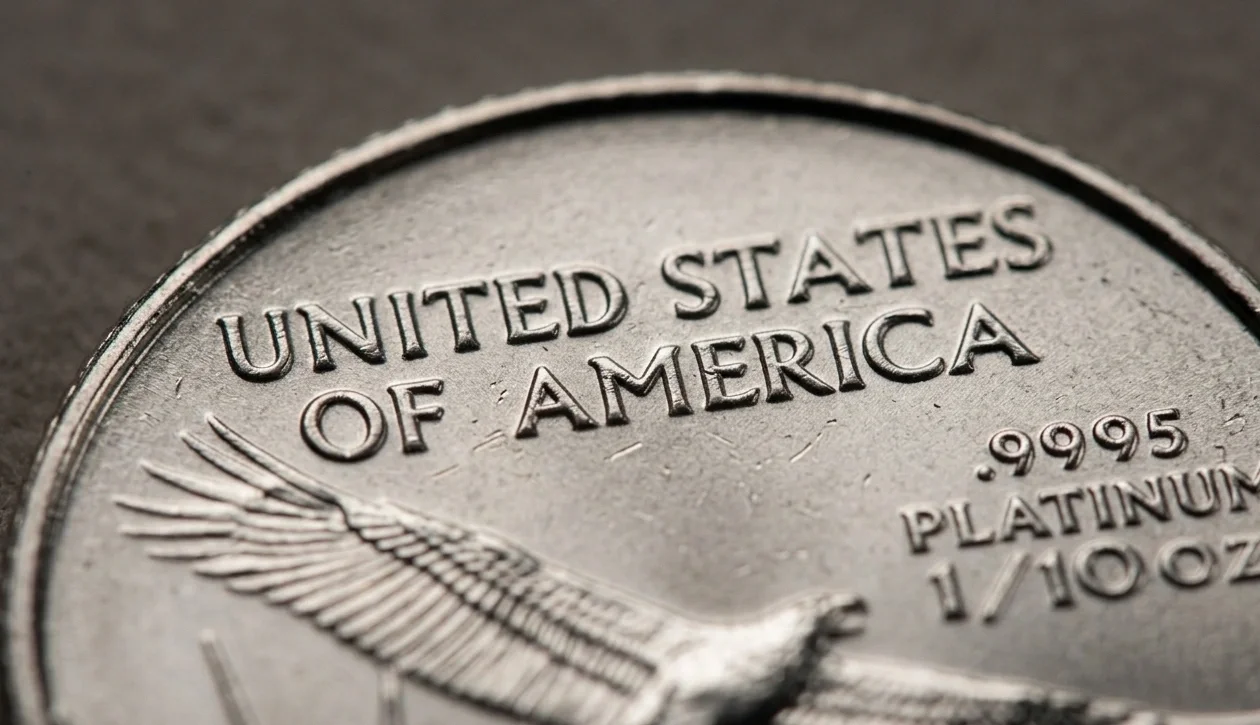
Congress originally approved this Latin phrase for the Great Seal in 1776.
Period | Coin Type | Application Method | Location |
1795–1807 | Capped Bust Right | Hand-punched | On ribbon |
1807–1834 | Capped Bust Left | Hub transfer | Above eagle |
1834–1866 | Classic Head | Absent | Temporarily removed |
1866–1907 | Liberty Head | Die engraving | Arced above eagle |
Removing the motto in 1834 aimed at simplifying the design to accelerate production.
Reintroducing the text happened immediately following the conclusion of the Civil War.
Statistics indicate an annual price appreciation for early 1795 strikes at a rate of 8.5%.
Font Variations on One Dollar Denominations
Morgan Silver Dollars demonstrate classic execution using Roman-style lettering.
George Morgan selected a font featuring prominent serifs.
Letters maintain a uniform height throughout the entire phrase.
Type 1: Wide Spacing Between E and P
Commonly found on Carson City mint issues. Record price for 1889 CC in MS68 grade: $840,000
Annual value growth: 12%
Type 2: Narrow Lettering Utilized on Philadelphia dies
Price for common specimens: $45 – $70
Type 3: High Relief Inscription
Found on the 1878 pattern strikes
Heritage Auctions record: $150,000
→ Cause of changes: wear on the master hub tools. → Consequence: emergence of sub-types classified by VAM researchers.
Omitting the period after the letter M indicates a die polishing error.
Denomination | Metal Content | Mass | Diameter |
1 Cent (Lincoln) | Copper | 3.11 grams | 19.05 mm |
5 Cents (Jefferson) | Copper-Nickel | 5.00 grams | 21.21 mm |
10 Cents (Roosevelt) | Silver | 2.50 grams | 17.91 mm |
25 Cents (Washington) | Silver | 6.25 grams | 24.26 mm |
Calculations were performed for samples produced prior to 1964.
Modern copper-nickel counterparts possess identical dimensions while weighing less.
Weight standard compliance undergoes annual review by the Assay Commission.
Innovations of Augustus Saint-Gaudens in 1907
Redesigning the twenty-dollar coin in 1907 changed the motto's display method entirely.
Saint-Gaudens moved the phrase to the edge of the coin.
Letters were separated by raised stars.
Early High Relief Variant
Motto applied through multiple strikes
Mintage: 12,367 units.
Price for MS67: $600,000
Motto-less Variant 1907–1908
Inscription omitted due to President Roosevelt’s religious concerns
Price for MS65: $3,200
Restored Motto after 1908
Text returned above the sun on the reverse side
Average price: $2,800
Presidential executive orders banned using the word God, yet the Latin motto remained as a secular element.
You can easily determine your coin with the coin value checker app.
Edge lettering errors on these specific coins occur extremely rarely.
Upside-down edge text increases the lot value by 40%.
Specific Minting Errors
Disrupting the production cycle generates numismatic rarities.
Misaligned dies cause partial disappearance of the Latin words.
Double Die Reverse (DDR)
Doubling of all motto letters is frequently seen on 1964 cents
MS65 specimen price: $450
Missing Motto Error
Complete absence of text caused by grease-filled dies
Typical for modern State Quarters
Price: $100 – $150
Weak Strike
Lack of detail in the central letters reduces coin value by 15% relative to the market average
→ Rarity factor: quantity of surviving defective specimens. → Verification: mandatory certification from NGC or Scan Coins For Value app.
Investors allocate funds into verified errors showing 5% growth per quarter.
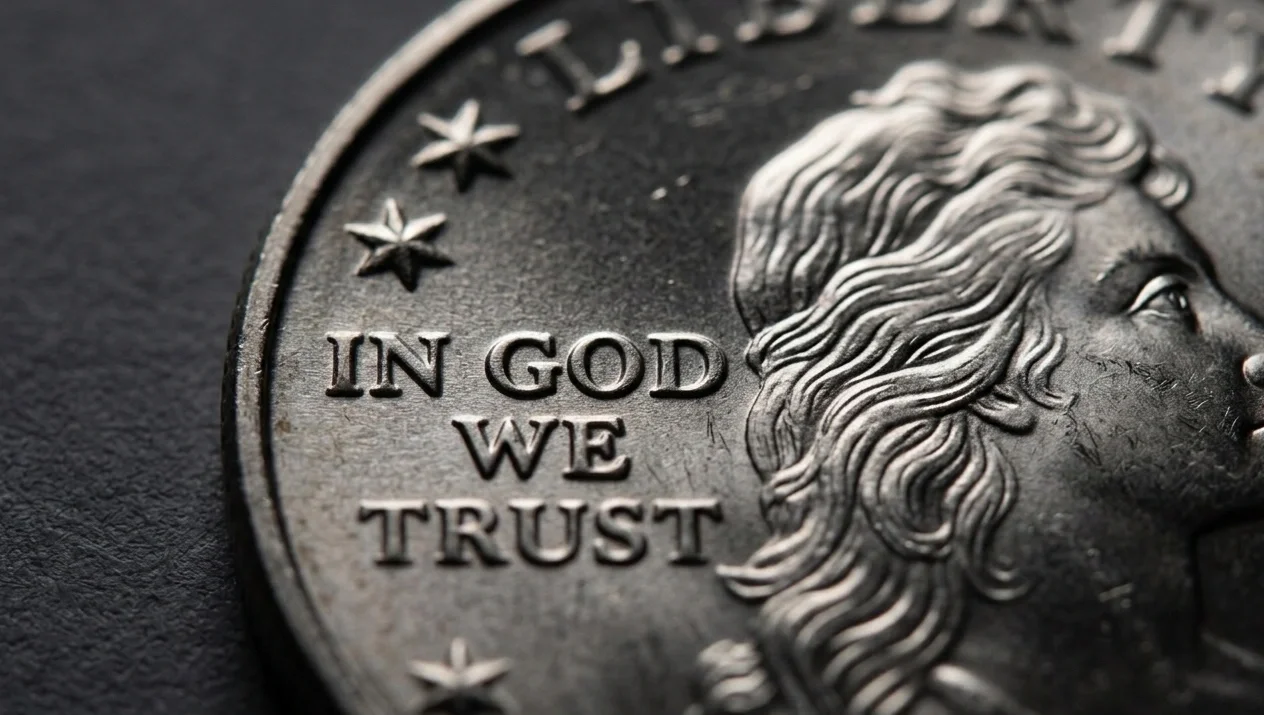
Motto on Modern Investment Coins
Gold Eagle and Silver Eagle issues utilize traditional Latin placement.
Gold coins feature the text positioned to the left of the eagle.
Silver coins display the phrase in the bird’s beak, mimicking 18th-century designs.
American Silver Eagle (Type 1)
Sans-serif font style Production period: 1986–2021
Current metal-based price: $35
American Silver Eagle (Type 2)
Updated serif font Production period: since 2021
Mintage: unlimited
American Gold Eagle
Pure gold content: 31.10 grams
Total mass: 33.93 grams
Current price: $2,450
Liquidity for these positions exceeds 98% on the secondary market.
Spread between buying and selling prices averages 3%.
Implementing computer modeling in the 21st century altered the appearance of inscriptions.
Laser engraving ensures perfect symmetry.
Font Style | Coin | Execution Features | Readability |
Antiqua | Morgan Dollar | Deep serifs, variable thickness | High |
Sans Serif | Franklin Half | No serifs, straight lines | Medium |
Incuse | Indian Head Gold | Letters pressed into the metal | Low |
Modern Gothic | Platinum Eagle | Elongated proportions | High |
Pressed-in inscriptions on Bela Lyon Pratt’s gold coins required specialized die cleaning.
Debris accumulating inside the letters triggered corrosion in the gold alloy.
Market value for incuse Five Dollar pieces in AU58 condition stands at $750.
Statistical Research of Market Value
Analyzing data over the last decade reveals pricing patterns.
Coins featuring the motto in high relief appreciate faster than standard strikes.
Early Gold sector growth: 7% annually
Silver Dollars sector growth: 4% annually
Low-grade coin depreciation: 2% annually
Investment appeal depends directly on the sharpness of the letter strikes.
Losing the horizontal bar in the letter E reclassifies the coin into a lower grade.
Fifty percent loss in motto detail equates to a 60% drop in market price.
Role of the San Francisco Mint in Motto Variation
The San Francisco branch traditionally produces Proof quality coins.
Applying mirrored fields and frosted relief highlights the inscription.
→ Technology: double striking with high pressure. → Result: cameo effect where Latin appears white against a black background.
Price for a 1950 set with a sharp motto: $600.
Price for an identical set with polishing defects: $420.
The proportion of flawless inscriptions in Proof issues reaches 99.7%.